
The festival's opening ceremony was attended by many influential figures of the Hungarian filmmaking industry, including Lili Horvát, Dénes Nagy, Dániel Tiszeker, and Tamás Hutlassa, as well as Ervin Nagy, State Secretary for Culture, and Justin McKenzie Smith, the United Kingdom's Ambassador to Hungary. Among the guests, well-known actors, producers, and this year’s "Friss Csillagok" (Fresh Stars), Irma Major and Vince Juhász, also made an appearance.
In his speech at the opening, Dániel Deák, Director of Friss Hús, noted that it will be fascinating to observe over the coming years how political changes will influence the themes and visual languages of short films, as this art form always reflects with great precision the issues that preoccupy creators and, of course, the audience.
The program of the first few days showcased the many different faces of short films. Alongside the Hungarian and international competition programs, audience favorites like Weirdcore and Queer Dreams returned, while Glitches, a British focus program, provided a fresh look at where the UK short film scene is heading today.
Professional industry programs took center stage just as much as the screenings themselves. Brief to Direct explored the intersection of commercials and auteur filmmaking ideology, clashing the perspectives of various industry players in a rarely seen manner—from the client's side through the creative concept and production, all the way to the birth of the finished film.
At Friss Pitch, ten short film projects currently in development were presented to the audience and a professional jury. This year's projects revolved around questions of identity, grief, body image, desire, social disparities, and family heritage—spanning animation, documentary, horror, and deeply personal dramas.
The film projects were evaluated once again by a prestigious professional jury: director-screenwriter Szilárd Bernáth; actress Katica Nagy, a former Fresh Star who can be seen in this year's film Pont más (Just Different); Ildikó Takács, board member of the Hungarian Animation Producers Association; and Attila Hartung, member of the Hungarian Feature Film Directors Association. Following the presentations, the jury provided detailed feedback to the creators, discussing not only the dramaturgy of the stories but also production opportunities, post-production challenges, and the future potential of the projects.
In the traditional Röviden – tömören? (In Short – Concisely?) program, Dr. András Bálint Kovács analyzed Bálint Kenyeres’s film The Spectacle—which previously debuted at Cannes—scene by scene, examining how cinematic storytelling works when the most significant shifts do not take place on the surface.
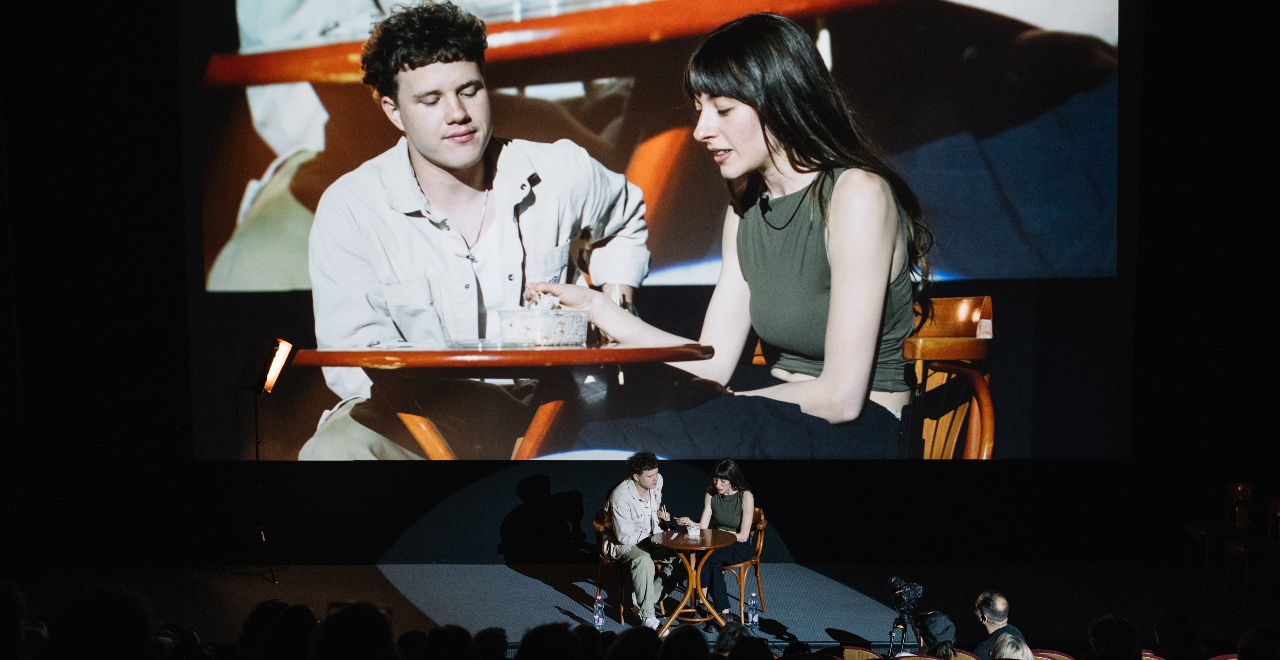
One of the weekend’s most exciting events was Természetellenes szelekció (Unnatural Selection), where under the guidance of casting director Kata Bartsch, the exact same scene came alive in new ways over and over again in front of the audience. The Fresh Stars, Irma Major and Vince Juhász, performed the same situation using different directions and casting variations, spectacularly demonstrating how multifariously a scene can shape up during the rehearsal process.
This year's film music workshop, Ready, Set, Score, was exceptionally original. It offered a glimpse into the collaboration between composer Milán Hodován and director János Szirmai, led by Balázs Alpár. Alongside the great atmosphere, the audience truly got behind-the-scenes insights into how a director-composer partnership operates, what kind of feedback is exchanged, and where such collaborations can hit a snag.
Benoit Berthe Siward’s masterclass also drew immense interest, exploring how a short film can find its audience within the international festival circuit and how visibility becomes an integral part of filmmaking. The panel discussion titled Roots to Reach examined how local stories can become internationally understandable and valid. Throughout the professional programs, it was refreshing to see how active the audience was in the dialogue, contributing with constructive questions.
Friss Hús continues until Wednesday at the Puskin Cinema and at the festival’s open-air venue in the City Hall Courtyard (Városháza udvara), where screenings will run even on Thursday. Over the next few days, new competition blocks, industry programs, and Q&A sessions await viewers, and the festival will conclude on June 3rd with this year’s award ceremony.