
Friss Hús has always represented the "future tense" of Hungarian cinema: it has provided space for experimentation and opportunities for talented artists to introduce themselves, thereby ensuring the next generation of creators. Now, in a time of renewal for Hungarian film, it is doubly exciting to see what kind of works the future generation of filmmakers will present.
This year, the multi-award-winning director Anna Korom joined the Friss Hús team. She and Dániel Deák, the festival's founder, curated this year’s program. "The freshness of Friss Hús is guaranteed by continuous renewal, which is why I wanted a new directorial perspective to emerge in the selection of Hungarian films. Anna’s creative vision—her sensitivity to problems, creative richness in detail, and humor—was evident throughout our collaboration, allowing us to present the most diverse Hungarian competition program of all time at the 2026 Friss Hús."
The Hungarian competition program is the most important section of Friss Hús, consisting of creative new works that reflect on the social issues of our age and our immediate or broader environment, or examine personal stories and psychological situations through an auteur’s voice, often using unconventional, fresh, and unique cinematic language. The selection places the viewer into the perspective of contemporary youth: the experience of freedom appears alongside the uncertainties of the modern era, the search for identity, and the desire for connection—all depicted in striking, diverse cinematic styles ranging from abstract to realistic approaches.
The authors of the films appearing at the 2026 Friss Hús include both well-known filmmakers awarded at international festivals and creators at the beginning of their careers.
Friss Hús welcomes back several returning directors. Zsuzsanna Kreif, who won the award for Best Hungarian Animated Short in 2015 with Limbo Limbo Travel, returns with the étude Adgwa Ata, which debuts in the Critics' Week program at the Cannes Film Festival just before Friss Hús. Last year’s winner of the Best Director Under 30 category, Kristóf Zsolt Tóth, also arrives with a new film (Alíz, the Lover of the Toreador ), while Kata Lovrity, who previously debuted in Berlin, presents her film Marble and Lemons. The 2026 selection includes several names—such as Gábor Ulrich, Eszter Kisházy, Gergely Lukács, or Gábor Varga—who have appeared in the festival's program multiple times in recent years, demonstrating that Friss Hús is simultaneously a debut platform and a professional environment fostering continuous renewal for Hungarian short filmmakers.

Traditionally, Friss Hús is also one of the most important debut platforms for Hungarian actors. This year’s Friss Csillagok (Fresh Stars), Irma Major and Vince Juhász, both appear in the selection. Vince Juhász stars in Gábor Varga’s 90s-era Slovakian-Hungarian mafia story, Kilépő, while Irma Major features in Utószezon (dir. Eszter Kisházy). Besides them, audiences can expect to see actors on screen—and likely at the festival screenings—such as Judit Pogány, Eszter Ónodi, Zsolt László, Lili Vetlényi, Mariann Hermányi, Zsolt Dér, Natasa Stork, Péter Katona, Szabolcs Thuróczy, Judit Schell, Laura Döbrösi, Judit Meszléry, Tamás Fodor, and Mari Nagy, as well as previous years' Fresh Stars, Emília Pigler and Katica Nagy. In the film No big deal, Ernő Rubik, previously known primarily as a musician and movement artist, also makes an appearance.
This year’s festival selection is diverse both in genre and theme, yet common motifs and questions clearly emerge. Several works examine the uncertainty of coming-of-age and path-finding, as well as the fragility of contemporary relationships, often against the backdrop of an alienating urban environment. Other films expand on questions of family patterns, generational differences, and the relationship to "home," starting from everyday situations.
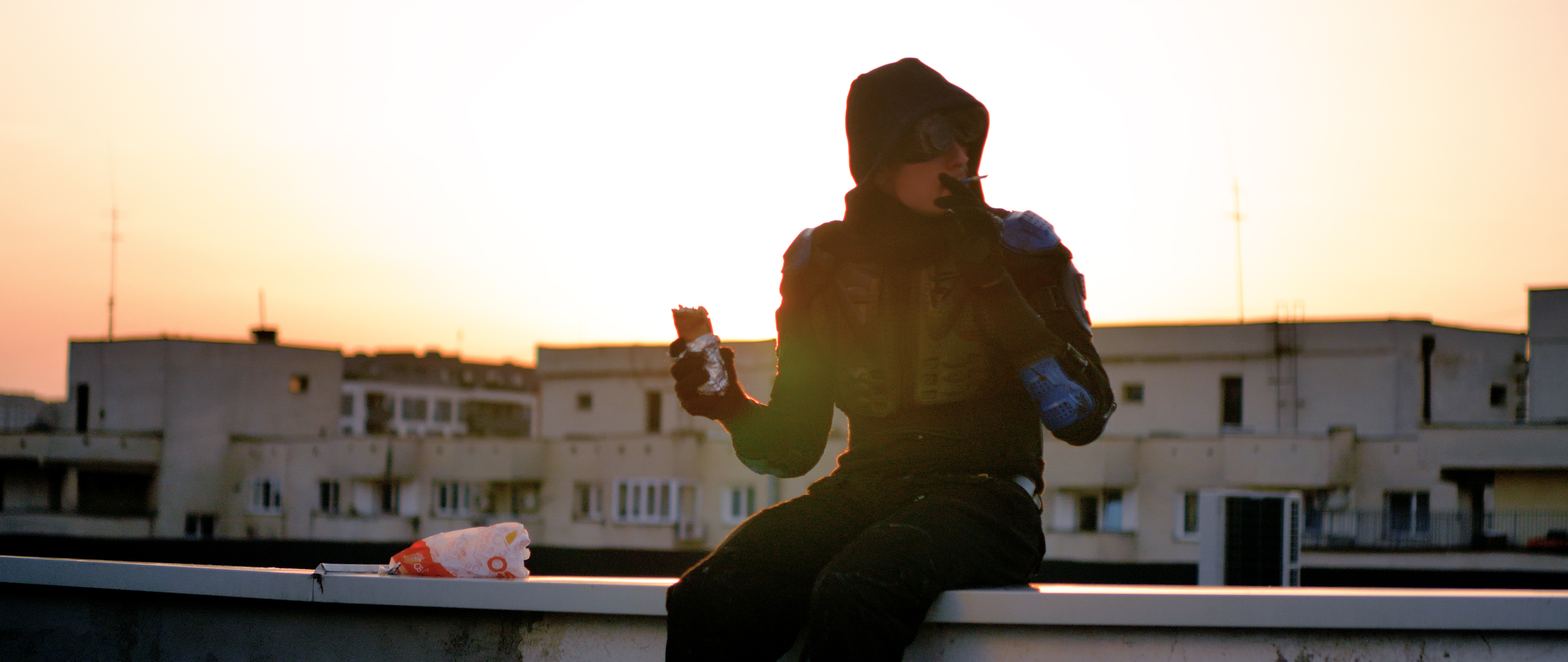
The current lineup outlines what occupies the young filmmaking generation in Hungary today and reflects one of the short film’s greatest virtues: courage, experimentation, and the pushing of boundaries. The live bear in Something Wild, the Transylvanian superheroes of Strigoi, the hair-raising story of Immortals, and the cavalcade of experimental films and abstract animations perfectly demonstrate how rebellious, brave—and sometimes downright reckless—and freedom-seeking the young creative generation in Hungary is today.
Themes of existential uncertainty, the experience of being "stuck," and the blurring of boundaries between imagination and reality are strongly present. The animation section is particularly diverse: alongside lyrical, experimental, and abstract directions, several works open toward internal worlds and visual narratives.
Since 2013, the Friss Hús Budapest International Short Film Festival has worked to create an inspiring creative environment for the Hungarian film world, supporting young filmmakers through workshops, pitch forums, and other professional programs alongside its screenings. Since then, it has grown into the largest Hungarian short film festival and one of the most important domestic motion picture events, with over ten thousand visitors annually. In October 2024—first in Hungary—it was added to the list of Oscar®-qualifying festivals.
Fresh and valuable works by creative young filmmakers with unique voices appear in the program year after year—such as Kristóf Deák’s Oscar®-winning film Sing (Mindenki) or Flóra Anna Buda’s Palme d'Or-winning animation from Cannes, 27. The general public and the industry can watch new Hungarian and international short films on the big screen, accompanied by roundtable discussions, concerts, and many other events. The week-long festival expands every year with more programs and venues; this year, in addition to Budapest, Friss Hús screenings will take place nationwide.
The programs for Friss Hús Budapest’s side sections and international competition will be announced later. The winners of the competition programs will be announced on the final day of the festival, June 3.
Read more about the films here.