
Our first full-house event took place even earlier than usual. Launched in May, Filmreform was also represented at Friss Hús: led by László Kolozsi, discussions touched upon the visibility of short films, the legal frameworks of filmmaking, the status of experimental cinema, and even the reimagining of film education. The program sparked such a lively dialogue that conversations continued in the café of the Puskin cinema long after the official wrap-up.
In the afternoon, the audience gained insight into the inner workings of the international short film market during the industry event titled Would You Buy This?, moderated by short film expert and curator Jing Haase, industry head of the Internationale Kurzfilmtage Winterthur. International sales agents and distribution professionals—Tamás Liszka, Sarah Dombrink, Grégoire Feron, and Sadhbh Murphy—evaluated selected films based on their first three minutes to determine if the artwork piqued their interest, mimicking the exact process that happens at festivals and markets. The experts discussed the criteria they use to judge a film's international distribution potential: how effectively it grabs attention right away, whether it features an unexpected or memorable moment, what emotions it evokes, and how well it can find its target audience. The conversation also revealed that a strong opening, a unique visual style, or even an already secured festival award can carry significant weight. Meanwhile, topics like the international state of animation, the importance of accessibility, and the impact of cultural differences on a film's reception abroad were also addressed.
An incredibly exciting industry program awaited us in the evening as well. In the panel discussion Cut Short – Typical Mistakes in Short Films, Gábor Osváth and Dániel Deák representing Friss Hús talked with editor Judit Czakó and Anna Korom, director of Diamond Beauty, who also participated in selecting this year's Hungarian competition program for Friss Hús. During the roundtable, almost every major stage of filmmaking was covered. The participants discussed how a good idea becomes a workable screenplay, what depends on editing, what typical mistakes can derail a film, and what happens to it after it finishes its festival run. The audience actively joined in with plenty of questions and comments during the event, which ended up running nearly twice as long as originally planned.
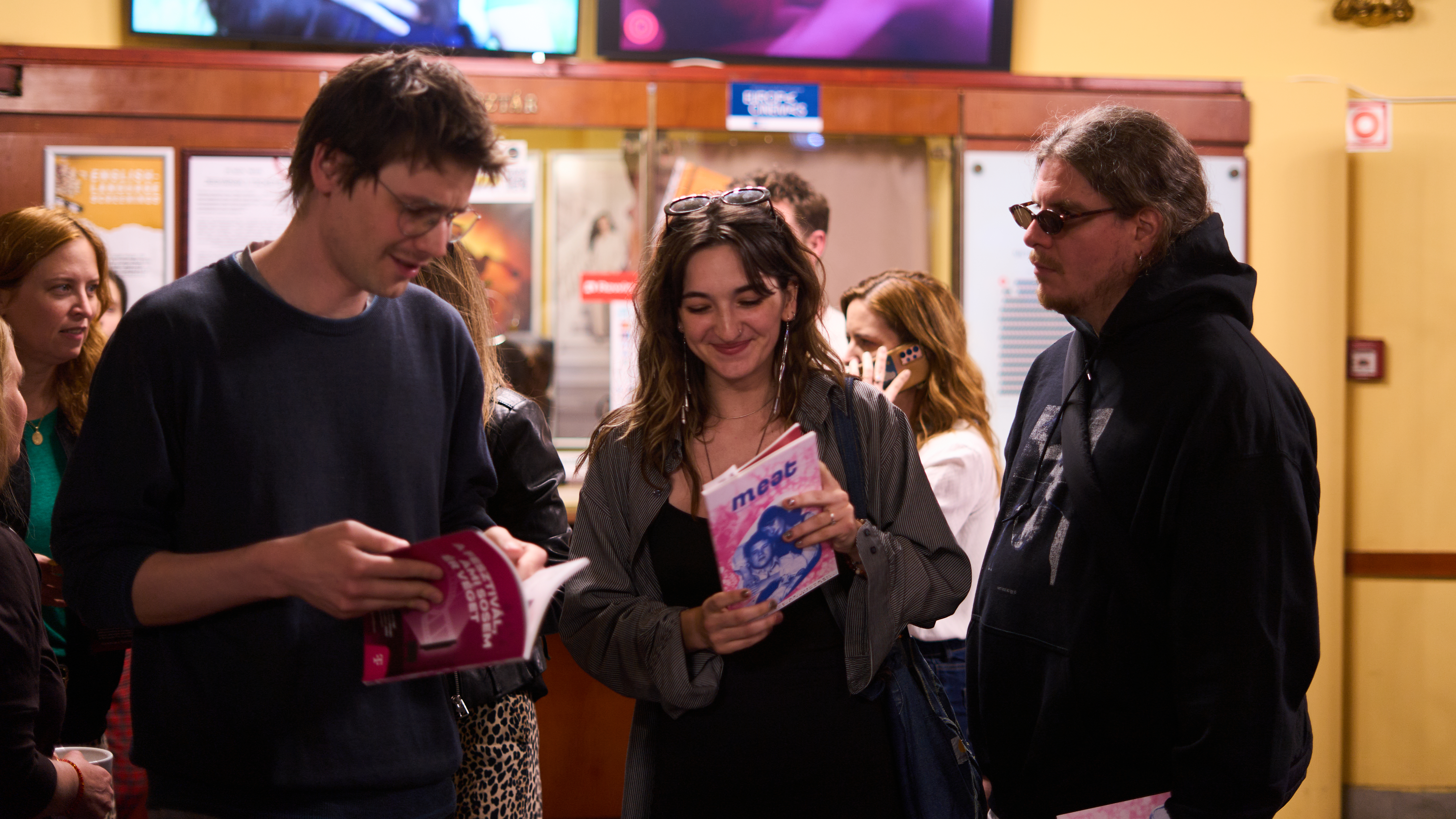
It will be well worth paying attention to both the films and the industry programs today, too. In the Puskin café, for instance, we will be discussing one of the most pressing current topics: how artificial intelligence is transforming the film industry.
You can still catch the films during the remaining two days of the festival.
Tickets and registration at the usual place.